
HardMagic / method
Field note · 2026.08 · source collections
Source Collection to Intelligence
Source Collection to Intelligence connects source collections, curation, and retrieval context as one consequential decision.
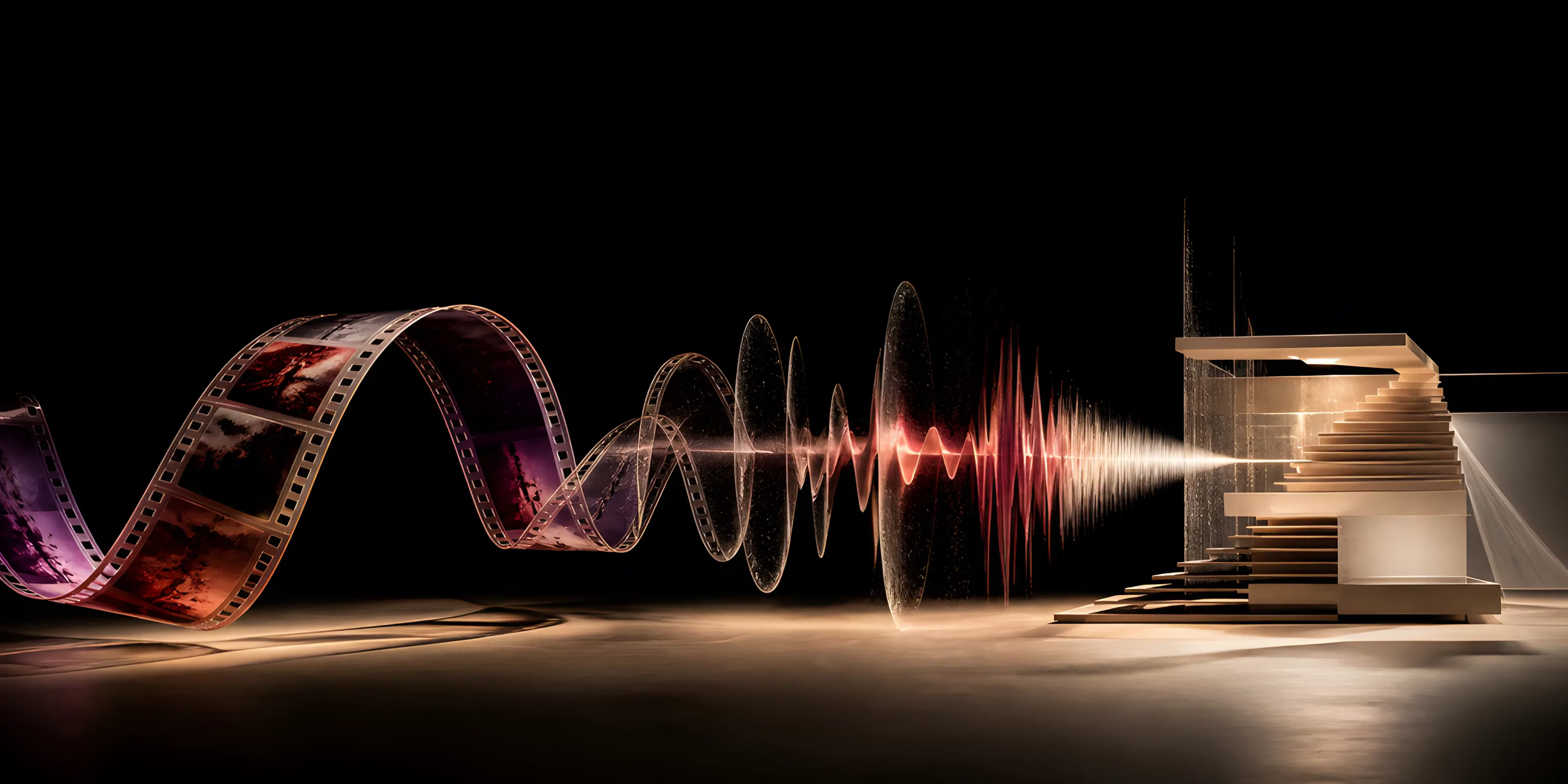
Position / 01
Source collections become intelligent through curation relationships rights and retrieval context.
The decision in front of you
Source Collection to Intelligence connects source collections, curation, and retrieval context as one consequential decision.
Source collections become intelligent through curation relationships rights and retrieval context.
Why source collections changes the work
This page helps readers turn underused media into usable memory.
It treats source collections, curation, and retrieval context as connected operating concerns rather than isolated deliverables.
What to inspect
- Use the collection layers to establish context, then inspect the curation funnel for mechanism and decision points.
- The metadata graph should expose evidence, trade-offs, or a practical exercise instead of serving as decoration.
Keep tracing the questionRead the media asset-estate brief ↗
Boundaries and proof
This method structures judgment; it does not replace practitioner expertise or guarantee a particular result.
Before publication, factual claims require inspectable product behavior, attributed first-party experience, or dated source notes.
Choose the next depth
- Ready readers can assess a source collection.
- Readers still framing the problem can read the media asset-estate brief.
Operating view
Make the invisible structure visible.
HardMagic works in systems: who decides, what evidence travels with the work, where intelligence runs, and how an idea survives the journey into production. This diagram is conceptual—not a claim of measured product performance.
The next useful depth
Choose the path that fits the decision.
Turn underused media into usable memory. If the question has an owner and a horizon, take the working path. If it still needs language, keep building context first.